


So, you’re thinking about giving your concrete floors a facelift? Well, epoxy flooring might just be what you’re looking for. It’s not just about looks; it’s tough, easy to clean, and can totally change the vibe of a room. Whether it’s your garage, basement, or even a commercial space, epoxy flooring can handle it all. Let’s dive into what makes it so great and how you can get it right.
Key Takeaways
- Epoxy flooring is a durable option for concrete surfaces, perfect for high-traffic areas.
- Proper surface preparation is crucial to ensure the epoxy adheres correctly and lasts long.
- There are various types of epoxy flooring, each with unique benefits, so choose based on your needs.
- While DIY installation is possible, hiring a professional can ensure a flawless finish.
- Regular maintenance and cleaning will keep your epoxy floors looking new for years.
Understanding Epoxy Flooring for Concrete
What is Epoxy Flooring?
Epoxy flooring is a synthetic resin floor system that is applied over concrete surfaces for protection and decoration. It’s made by mixing epoxy resin with a hardener, creating a strong, durable plastic material. This type of flooring is popular in both residential and commercial settings due to its robustness and ability to bond well with concrete substrates.
Key Components of Epoxy Flooring
- Epoxy Resin: The primary ingredient that gives the floor its strength and durability.
- Hardener: A component that cures the resin, transforming it into a solid, durable surface.
- Additives: These include pigments, flakes, and other materials that add color, texture, and additional properties to the flooring.
Benefits of Epoxy Flooring
- Durability: Epoxy floors can withstand heavy traffic and impacts, making them ideal for high-use areas like garages and warehouses.
- Easy Maintenance: With a seamless surface, epoxy floors don’t trap dirt or dust, making cleaning simple.
- Aesthetic Appeal: Available in a variety of colors and finishes, epoxy flooring can be customized to match any style.
- Chemical Resistance: Epoxy is resistant to many chemicals, which is perfect for industrial environments.
- Safety: Options for non-slip additives enhance safety in areas prone to spills.
Epoxy flooring isn’t just about looking good; it’s about providing a practical, long-lasting solution that can handle the demands of any space.
Preparing Your Concrete Surface for Epoxy Flooring
Cleaning and Repairing the Concrete
Before you even think about applying epoxy, you gotta make sure your concrete is in tip-top shape. Start by clearing the area of any furniture or debris. Then, grab a good degreaser and get rid of any grease or oil stains. Use an etching solution to clean the surface thoroughly. If you spot any cracks or holes, fill them in with a suitable concrete patch. This step is crucial because any imperfections can mess up the final look of your epoxy floor.
Importance of Surface Preparation
Surface prep is not just a suggestion—it’s a must. A clean and smooth surface ensures that the epoxy adheres properly, giving you a long-lasting and durable finish. Here’s a quick checklist to follow:
- Remove all dust, dirt, and debris
- Check for moisture issues
- Ensure the surface is dry
Skipping these steps can lead to peeling or bubbling, so take your time here.
Sealing the Concrete Surface
Once your surface is spotless and repaired, it’s time to seal it. Sealing helps protect your concrete from moisture and other potential issues. Use a high-quality concrete sealer and apply it evenly across the surface. This not only helps the epoxy stick better but also extends the life of your floor. Think of sealing as adding an extra layer of protection to your investment.
Proper preparation isn’t just about getting the job done—it’s about getting it done right. A well-prepared surface sets the stage for a beautiful and durable epoxy floor. Don’t rush it; your efforts will pay off in the long run.
For more specific guidance on floor preparation, including how to inspect for cracks and moisture issues, checking out detailed resources can be incredibly helpful.
Choosing the Right Epoxy Flooring for Your Space
Types of Epoxy Flooring
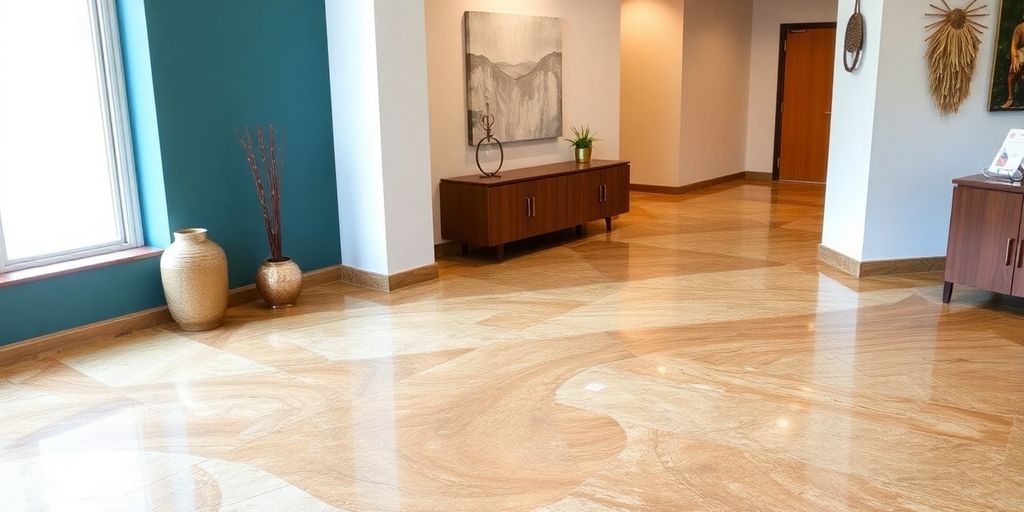
Epoxy flooring comes in various types, each suited for different needs and environments. Standard epoxy is most common, offering a smooth, durable surface ideal for garages and basements. Then there’s metallic epoxy, which adds a shimmering, reflective surface that can make any room pop. If you’re looking for something decorative, consider flake epoxy, which incorporates small chips for a textured look.
Factors to Consider When Choosing Epoxy
When selecting an epoxy floor, there are several factors to keep in mind:
- Durability: Consider the level of foot traffic in the area. High-traffic areas might benefit from a more robust epoxy type.
- Slip Resistance: If safety is a concern, look for epoxy with textured finishes.
- Aesthetic Appeal: Choose from a variety of colors and finishes to match your design vision. Selecting an epoxy floor color involves considering durability and maintenance as well.
Customizing Your Epoxy Floor
Customizing your epoxy floor allows you to create a unique space that reflects your personality. You can choose from a wide range of colors, add decorative flakes, or even create patterns. Bold colors can make a statement, while subtle hues can create a calm, inviting atmosphere.
Epoxy flooring is not just about functionality; it’s about creating a space that feels uniquely yours. With endless customization options, your floor can be as unique as you are.
The Installation Process of Epoxy Flooring
Step-by-Step Installation Guide
Installing epoxy flooring can seem daunting, but breaking it down into manageable steps makes it easier. Preparation is key. Start by clearing the area of any furniture or debris and ensure the surface is thoroughly cleaned. Use a degreaser to remove any oil or grease stains. Next, repair any cracks or imperfections in the concrete. It’s crucial that the surface is completely dry before moving on. Once the surface is prepped, apply a primer to seal the concrete and provide a good base for the epoxy to adhere to.
Mix the epoxy resin and hardener according to the manufacturer’s instructions. Apply the mixture using a roller or squeegee, working in small sections to ensure even coverage. Allow the first coat to dry completely before applying additional layers. Finish with a clear topcoat to enhance durability and shine.
Common Mistakes to Avoid
When installing epoxy flooring, avoid these common pitfalls:
- Skipping surface preparation: The epoxy won’t adhere properly to a dirty or uneven surface.
- Ignoring the manufacturer’s instructions: Mixing ratios and drying times are crucial for a successful installation.
- Rushing the curing process: Allow sufficient time for each coat to dry to prevent peeling or bubbling.
Professional vs. DIY Installation
Deciding between a professional installation and doing it yourself can depend on several factors. DIY can be cost-effective and rewarding if you’re handy and have the time. However, professionals bring expertise and tools that can ensure a flawless finish. They also handle the prep work, which can be labor-intensive. Consider your budget, time, and skill level when making this decision.
Epoxy flooring is a durable and attractive option for many spaces, but achieving a perfect finish requires attention to detail and patience. Whether you choose to hire a professional or tackle the project yourself, understanding the process is crucial to success.
Maintaining and Caring for Your Epoxy Floor
Regular Cleaning Tips
Keeping your epoxy floor looking fresh doesn’t have to be a chore. Regular cleaning is key to maintaining its shine and longevity. Start by sweeping or vacuuming regularly to get rid of loose dirt and debris. For a deeper clean, use a mop with a gentle cleaning solution. Avoid harsh chemicals or abrasive scrubbers as they can damage the surface. Epoxy floors are pretty tough, but treating them with care will keep them looking new.
Handling Spills and Stains
Epoxy floors are resistant to a lot of stuff, but that doesn’t mean you should leave spills unattended. If you spill something, especially chemicals, clean it up right away. This not only prevents stains but also keeps the floor from getting damaged. Quick action is your best friend here. For stubborn stains, a mix of water and mild detergent usually does the trick.
Long-term Maintenance Strategies
To make sure your epoxy floor stays in top shape for years, you’ll want to think long-term. First off, use mats in high-traffic areas or under heavy furniture to protect the floor from scratches and dents. Regularly inspect for any signs of wear or damage, like cracks or chips, and address them promptly. This can help extend the life of your floor and keep it looking pristine. Also, consider setting a consistent cleaning schedule to keep everything in check.
It’s amazing how a little regular upkeep can go a long way in preserving the beauty and functionality of your epoxy floor. With just a bit of effort, you can keep your space looking sharp and well-maintained.
Exploring the Aesthetic Possibilities of Epoxy Flooring
Color and Design Options
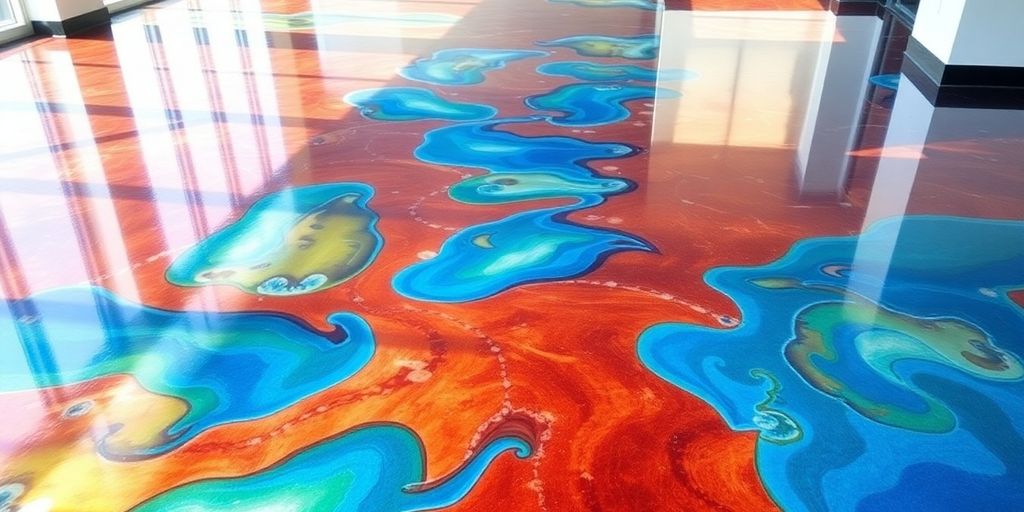
Epoxy flooring opens up a world of color and design possibilities. You can choose from a vast range of hues to match any decor or style. Whether you want a subtle, neutral tone or a bold, vibrant color, epoxy can deliver. The ability to customize colors means that your floor can be as unique as your imagination allows. In addition to solid colors, you can opt for metallic finishes that create a shimmering, three-dimensional effect. This is perfect for modern spaces looking for a bit of flair.
Incorporating Decorative Elements
Adding decorative elements to your epoxy floor can transform it from simple to stunning. Consider using decorative flakes or quartz to add texture and interest. These elements not only enhance the visual appeal but also provide additional slip resistance, making them practical for areas prone to moisture. Metallic pigments are another popular choice, offering a luxurious, high-gloss finish that mimics the look of marble or granite.
Creating Unique Patterns and Textures
With epoxy flooring, you aren’t limited to just one look. You can create intricate patterns and textures that are impossible with other flooring types. Techniques like swirl patterns, color layering, and even embedding objects into the epoxy can result in a one-of-a-kind floor. This customization can be particularly appealing for commercial spaces looking to make a statement or residential areas aiming for a personalized touch.
Epoxy flooring isn’t just about durability; it’s about expressing your style and creativity. With countless options for customization, you can turn any space into a work of art, reflecting your personality and taste.
Safety and Environmental Considerations
Eco-friendly Epoxy Options
As more people prioritize sustainability, eco-friendly epoxy flooring options have gained popularity. These products utilize low-VOC (volatile organic compounds) formulations, which are better for both the environment and indoor air quality. Opting for low-VOC epoxy not only helps reduce harmful emissions but also makes your space safer and more comfortable to live in.
Enhancing Safety with Non-slip Additives
Epoxy flooring can be made safer by incorporating non-slip additives. These additives can be mixed into the epoxy to create a textured surface that reduces the risk of slips and falls. Especially in areas prone to moisture or spills, such as kitchens or garages, non-slip epoxy can be a game-changer. Consider these options:
- Silica Sand: Adds a gritty texture for better grip.
- Aluminum Oxide: Offers a more durable, non-slip surface.
- Polypropylene Beads: Provides a softer, less abrasive finish.
Understanding VOCs and Indoor Air Quality
Volatile organic compounds (VOCs) are chemicals that can easily become vapors or gases, impacting indoor air quality. Traditional epoxy products often contain high levels of VOCs, which can lead to health issues like headaches and dizziness. By choosing low-VOC or VOC-free epoxy products, you can minimize these risks and create a healthier indoor environment.
Remember, choosing the right epoxy flooring not only enhances the look of your space but also contributes to a safer and more eco-friendly environment. Whether you’re dealing with temperature extremes and chemical exposure or just want a more sustainable option, there’s an epoxy solution that fits your needs.
When it comes to safety and the environment, choosing the right flooring is crucial. Our epoxy floors not only look great but also help keep your space safe and eco-friendly. If you’re ready to make a smart choice for your home or business, visit our website to learn more about our flooring solutions!
Wrapping It Up: Epoxy Flooring for the Win
So there you have it, folks. Epoxy flooring isn’t just a trend—it’s a game-changer for anyone looking to spruce up their space. Whether you’re tired of that old garage floor or want to add some flair to your basement, epoxy’s got you covered. It’s tough, looks great, and won’t have you scrubbing away every weekend. Plus, with all the colors and styles out there, you can really make it your own. Sure, it might take a bit of work to get it just right, but once it’s down, you’ll be glad you made the switch. So go ahead, give your floors the makeover they deserve. Trust me, you won’t regret it.
Frequently Asked Questions
What is epoxy flooring?
Epoxy flooring is a special type of floor made from mixing resin and a hardener. When these two are combined, they form a strong plastic-like surface that sticks well to concrete. It’s often used to make floors look nice and last a long time.
Why should I choose epoxy flooring for my home?
Epoxy flooring is super tough and can handle lots of foot traffic, heavy things, and even spills. It’s also easy to clean and comes in many colors and designs, so you can make it look just how you want.
How do I prepare my concrete for epoxy flooring?
First, you need to clean the concrete really well, fixing any cracks or holes. Then, make sure the surface is dry and smooth. This helps the epoxy stick better and last longer.
Can I install epoxy flooring myself, or do I need a professional?
You can try installing it yourself if you like DIY projects, but be careful. It requires careful preparation and following steps exactly. For big areas or if you want it perfect, hiring a professional might be best.
How do I keep my epoxy floor clean?
Keeping your epoxy floor clean is easy. Just sweep or vacuum it regularly and mop with a gentle cleaner when needed. Avoid using harsh chemicals or rough scrubbers.
Is epoxy flooring safe for the environment?
Yes, there are eco-friendly epoxy options that have low VOCs, which are better for the air inside your home. Some even have non-slip additives to make them safer to walk on.
0 Comments