


Thinking about giving your basement a fresh look? Epoxy flooring might just be the answer. It’s not just about looks; this stuff is tough and can handle a lot. Whether you’re dealing with spills, heavy foot traffic, or just want a slick new look, epoxy flooring has got you covered. Let’s dive into what makes it such a great option for basements and how you can make it work for your space.
Key Takeaways
- Epoxy flooring is both durable and stylish, making it perfect for basements.
- Choosing the right type of epoxy is crucial for achieving the best results.
- Proper installation involves careful preparation and application.
- Maintaining your epoxy floor is easy with regular cleaning and prompt spill management.
- Innovative trends like metallic and eco-friendly epoxy options are available.
Understanding Epoxy Flooring for Basements
What is Epoxy Flooring?
Epoxy flooring is a popular choice for basements due to its durability and aesthetic appeal. Essentially, it’s a type of synthetic resin floor system that is applied over concrete substrates. This flooring is created by mixing two main components: resin and hardener. When combined, they form a rigid plastic material that bonds well to its substrate, resulting in a strong and long-lasting surface.
Benefits of Epoxy Flooring in Basements
Epoxy flooring offers numerous benefits that make it ideal for basement environments:
- Durability: Epoxy floors are incredibly tough and can withstand heavy foot traffic, impacts, and abrasions, making them perfect for basements that double as storage or recreational spaces.
- Moisture Resistance: This flooring provides a seamless, non-porous barrier that effectively prevents water and moisture infiltration, safeguarding both the surface and subfloor.
- Aesthetic Appeal: Available in a variety of colors and finishes, epoxy flooring can transform a drab basement into a vibrant and inviting space.
- Easy Maintenance: The smooth surface of epoxy flooring makes cleaning a breeze, requiring only regular sweeping and occasional mopping with a mild detergent.
Common Misconceptions About Epoxy Flooring
Despite its many advantages, there are some misconceptions about epoxy flooring:
- Slippery Surface: While epoxy floors can be slippery when wet, anti-slip additives can be incorporated to enhance traction.
- Difficult Installation: Although professional installation is recommended for best results, DIY enthusiasts can still achieve great outcomes with proper preparation and attention to detail.
- Limited Design Options: Contrary to popular belief, epoxy flooring offers a wide range of design possibilities, including metallic finishes and decorative flakes, allowing for customization to suit any style.
Epoxy flooring in basements is not just about functionality; it offers a chance to create a stylish and durable space that enhances the overall value of your home.
Choosing the Right Epoxy Flooring for Your Basement
Types of Epoxy Flooring
Picking the right epoxy flooring for your basement is like choosing the perfect paint color for your walls. There are several types to consider, each with its own unique characteristics. Metallic epoxy floors offer a shiny, artistic look that can make any basement feel like a modern art gallery. Then there are epoxy flake floors, which mix in colorful flakes to create a textured surface that’s both functional and visually appealing. Clear epoxy resin floors are another option, providing a glossy finish that enhances the natural beauty of the underlying concrete.
Factors to Consider When Selecting Epoxy
When you’re selecting epoxy flooring for your basement, think about a few key factors. First, consider how you plan to use the space. Is it a high-traffic area, or will it be more of a quiet retreat? Next, think about your aesthetic preferences. Do you want something bold and eye-catching, or are you looking for a more subtle finish? Budget is another important factor. Prices can vary widely depending on the type of epoxy you choose, so it’s wise to do some research and maybe even consult with a professional to get a better idea of what fits your needs.
Consulting with Professionals
Sometimes, it’s best to bring in the experts. Consulting with professionals can give you insights you might not have considered. They can help you understand the different types of epoxy available and which might be the best fit for your specific situation. Plus, they can provide valuable advice on installation and maintenance, ensuring that your new floor looks great and lasts for years to come. If you’re unsure, reaching out for professional guidance can be a smart move to avoid any potential pitfalls.
Installation Process of Epoxy Flooring in Basements
Preparing Your Basement Floor
Before diving into the actual epoxy flooring solutions process, you need to prep your basement floor. This involves a few steps to ensure that the epoxy adheres properly and lasts longer. First off, clean the concrete thoroughly. Remove any dust, grease, or existing coatings. A clean surface is key. Next, inspect the floor for cracks or damage. Patch these up because any imperfections can affect the finish. If your basement tends to be damp, it’s wise to conduct a moisture test. This will help you determine if additional moisture barriers are needed.
Mixing and Applying Epoxy
Once the floor is ready, it’s time to mix the epoxy. Follow the manufacturer’s instructions carefully for the best results. Usually, this involves combining the resin and hardener in the right proportions. Mix thoroughly, but be quick—epoxy can start to set fast. Using a roller or squeegee, apply the mixture evenly across the floor. If you’re adding decorative flakes or pigments, do it while the epoxy is still wet. This is your chance to get creative with the design.
Curing and Finishing Touches
After application, let the epoxy cure. This is a crucial step and can take anywhere from 24 to 72 hours depending on the product and environmental conditions. Avoid stepping on the floor during this time. Once cured, you might want to add a topcoat for extra protection and shine. This not only enhances the look but also boosts the floor’s durability, making it ready for heavy use. Remember, patience during the curing process will pay off in the long run with a stunning and resilient basement floor.
Transforming your basement with epoxy flooring is not just about aesthetics; it’s about creating a durable and functional space that stands the test of time.
Maintaining Your Epoxy Basement Floor
Regular Cleaning Tips
Keeping your epoxy basement floor clean is pretty straightforward. Regular sweeping or vacuuming helps to remove dust and dirt that can scratch the surface. For a deeper clean, use a mop with a mild detergent mixed with water. Avoid harsh chemicals or abrasive scrubbers, as they can damage the floor. A mild solution of dish soap and warm water is often recommended for its effectiveness without causing harm.
Addressing Spills and Stains
Even though epoxy floors are resistant to many chemicals, it’s still smart to clean up spills as soon as they happen. This prevents any potential staining or damage. If you spill something, just wipe it up with a soft cloth or mop. For stubborn stains, a gentle cleaner should do the trick.
Inspecting and Repairing Damages
Keep an eye on your floor for any signs of wear and tear. Look out for cracks or chips and take care of them quickly to avoid bigger issues later on. If you notice any damage, it’s best to consult with a professional to ensure proper repairs are made. Regular inspections can help extend the life of your epoxy floor, which can last anywhere from 10 to 20 years with good care.
Epoxy floors are not only durable but also easy to maintain, making them a great choice for basements. With a little care, they can keep looking fresh and new for years.
Innovative Trends in Epoxy Basement Flooring
Metallic Epoxy Designs
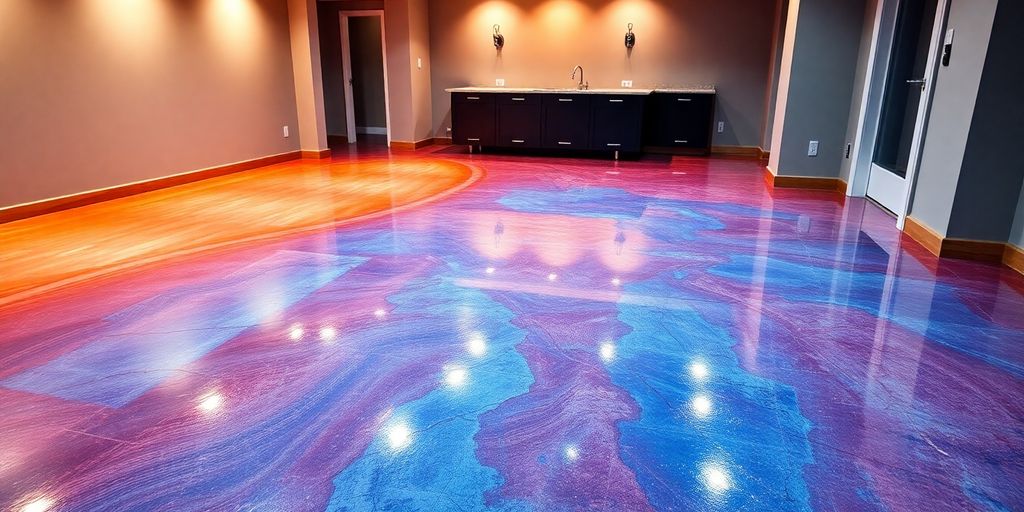
Metallic epoxy floors have taken the world by storm with their unique, eye-catching designs. These floors mimic the look of molten metal, creating a three-dimensional effect that can transform any basement into a modern masterpiece. The swirling patterns and vibrant colors offer a sleek, contemporary look that stands out. This style is perfect for those looking to make a bold statement in their home. With the ability to customize colors and patterns, you can ensure your floor is as unique as your taste. Designers are innovating in epoxy flooring with metallic finishes, 3D effects, and custom patterns, turning floors into artistic masterpieces.
Eco-Friendly Epoxy Options
As more people become environmentally conscious, the demand for eco-friendly epoxy flooring has surged. These options use low-VOC formulations, which are better for the environment and improve indoor air quality. Choosing eco-friendly epoxy doesn’t mean sacrificing style or durability. These floors are just as tough and beautiful as traditional options, making them a smart choice for those who want to reduce their carbon footprint without compromising on quality.
Custom Patterns and Textures
Epoxy flooring offers a world of customization possibilities. From intricate patterns to textured finishes, the options are endless. You can choose from a variety of colors, add decorative flakes, or even embed objects into the epoxy for a truly personalized touch. Epoxy terrazzo is a popular choice, combining the classic look of terrazzo with the durability of epoxy. This allows for creative designs that can make your basement floor a true work of art. Customization ensures that your flooring reflects your personal style, making it a unique addition to your home.
With so many innovative trends in epoxy flooring, there’s no limit to what you can achieve. Whether you’re looking for a modern metallic finish or a sustainable option, epoxy flooring offers endless possibilities to enhance your basement space.
Cost Considerations for Epoxy Basement Flooring
Understanding Pricing Factors
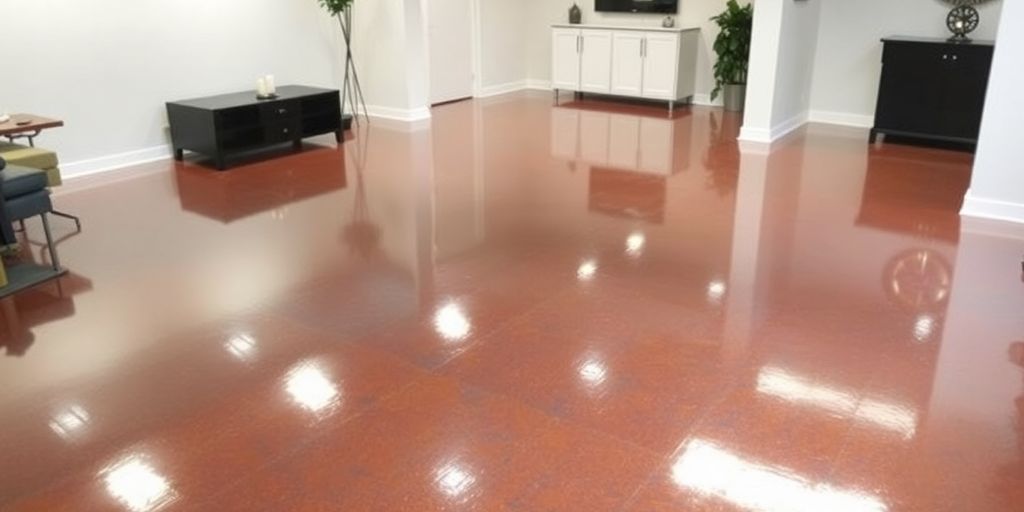
When you’re thinking about putting epoxy flooring in your basement, the first thing to consider is the cost. Prices can vary significantly, from as low as $3 to as high as $12 per square foot. This range depends on several factors like the type of epoxy you choose, the condition of your existing floor, and whether you’re going DIY or hiring a pro. For example, a basic epoxy coating might be on the lower end of the scale, while a metallic epoxy design could push you toward the higher end.
DIY vs Professional Installation
Deciding between doing it yourself or calling in the pros is another big consideration. If you’re handy and have some experience, going the DIY route could save you a chunk of change. But, there’s a risk: improper application can lead to issues down the line, like peeling or cracking. On the flip side, hiring professionals ensures a smooth finish and peace of mind, though it comes with a higher price tag.
Long-term Value and Investment
Investing in epoxy flooring is not just about the initial cost. Think of it as a long-term investment. Epoxy floors are durable and easy to maintain, which can save you money in the long run. They also add aesthetic appeal and potentially increase your home’s value. So, while the upfront cost might seem steep, the long-term benefits often justify the investment.
Choosing epoxy floors for your basement isn’t just a decision about aesthetics and durability—it’s a financial investment that could pay off in more ways than one.
When thinking about epoxy flooring for your basement, it’s important to consider the costs involved. While the initial investment might seem high, the long-term benefits, like durability and low maintenance, can save you money over time. If you’re ready to explore how epoxy flooring can enhance your space, visit our website for more information!
Conclusion
So, there you have it! Epoxy flooring can really change up your basement, making it not just a place to store old boxes but a cool, usable space. It’s tough, looks great, and doesn’t need a ton of upkeep. Whether you’re thinking of doing it yourself or calling in the pros, epoxy floors offer a bunch of options to fit your style and needs. Just make sure you prep the area right and pick quality materials. With the right care, your new floor will last for years, giving your basement a fresh, new vibe. Ready to get started? Dive in and see how epoxy can transform your space!
Frequently Asked Questions
How long does epoxy flooring last in a basement?
Epoxy flooring can last 10 to 20 years or even more if you take good care of it.
Can I put epoxy over my basement tiles?
Yes, you can put epoxy over tiles, but you need to prepare the tiles properly first.
What’s the best way to clean epoxy floors?
Use cleaners that are pH-balanced and stay away from rough scrubbers that might scratch the floor.
How much does it cost to epoxy a basement floor?
The cost can be between $3 to $12 per square foot, depending on the materials and how fancy you want it.
Is it possible to use epoxy on wood floors in the basement?
Yes, you can use special flexible epoxies that are made for wood surfaces.
Are epoxy floors slippery when wet?
Epoxy floors can be slippery when wet, but you can add things to make them less slippery.
0 Comments